How to Choose a CNC Vertical Lathe for Large and Heavy Workpieces (4)
12. Think About Production Rather Than Machine Size Alone
A larger machine is not automatically the most economical solution.
Oversizing the machine can increase:
Purchase cost
Installation cost
Foundation requirements
Energy consumption
Maintenance cost
Operator requirements
At the same time, undersizing the machine can create:
Multiple setups
Reduced productivity
Tool interference
Limited future capacity
Increased vibration
Higher machining costs
The correct approach is to identify the production envelope first.
A buyer should prepare several representative workpiece drawings and provide:
Maximum diameter
Minimum diameter
Maximum height
Material
Blank weight
Finished weight
Required tolerance
Surface finish
Roughing allowance
Required production quantity
The machine supplier can then recommend the appropriate configuration.
13. Application Areas for Large CNC Vertical Lathes
Large CNC vertical lathes are commonly considered for applications involving large-diameter components.
Typical industries include:
Wind Power
Wind turbine components can include large bearings, hubs, shafts, and other rotating components requiring high dimensional accuracy and stable machining.
Energy Equipment
Large valves, flanges, turbine-related components, and other energy equipment can require large vertical turning capacity.
Heavy Machinery
Large gears, drums, rollers, bearing housings, and structural rotating components may require high table load capacity.
Shipbuilding
Shipbuilding and marine equipment can involve large components that benefit from vertical turning.
Metallurgy
Steel and metallurgical equipment often includes large rollers, rings, housings, and other heavy components.
Mining Equipment
Mining machinery components frequently combine large dimensions with high material removal requirements.
14. CNC Vertical Lathe vs. Conventional Vertical Lathe
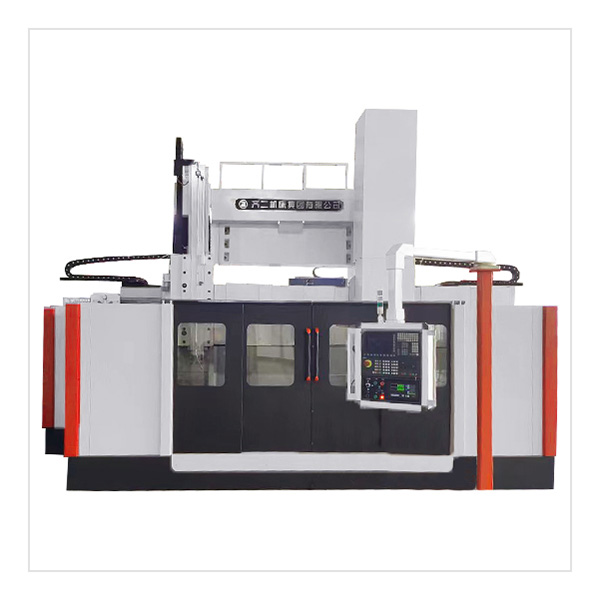
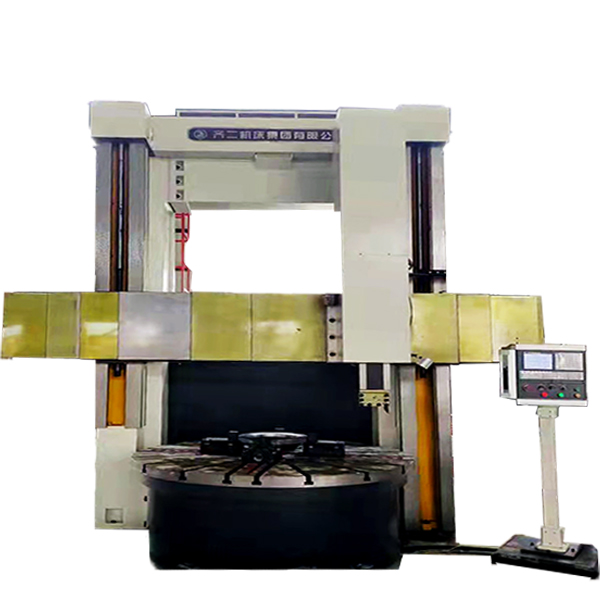
A CNC vertical lathe provides programmable control over spindle speed, feed, tool movement, and machining cycles.
This can provide several advantages for production environments:
Repeatable machining
Reduced manual intervention
Easier production of complex profiles
Better process consistency
Automated cycles
Improved production planning
For manufacturers producing repeated batches of similar components, CNC control can significantly simplify process standardization.
The advantage becomes particularly important when components require multiple machining operations and tight dimensional relationships.
15. What Should Buyers Ask the Manufacturer?
Before requesting a quotation, prepare a technical inquiry rather than simply asking for a machine price.
A useful RFQ should include:
Workpiece drawings
Material specifications
Maximum workpiece diameter
Maximum workpiece height
Workpiece weight
Required machining operations
Required tolerances
Required surface finish
Expected production volume
Preferred CNC system
Required tooling
Required accessories
Installation conditions
Power supply requirements
Inspection requirements
This allows the manufacturer to recommend a machine based on actual process requirements.
16. Why Machine Configuration Should Be Customized
Large CNC vertical lathes are often used for highly specialized applications.
Two manufacturers may have the same maximum workpiece diameter but completely different machining requirements.
For example, one customer may primarily perform heavy rough turning, while another may require precision finishing and multiple tool positions.
The machine configuration should therefore consider:
Toolholder type
Ram configuration
Worktable specification
CNC system
Crossrail travel
Spindle motor
Hydraulic system
Cooling system
Chip removal
Measurement systems
Workholding accessories
Customization can help avoid paying for unnecessary features while ensuring that critical capabilities are included.
17. A Practical Selection Checklist
Before making the final purchasing decision, confirm the following:
Maximum machining diameter is sufficient.
Maximum workpiece weight is sufficient.
Maximum turning height is sufficient.
Worktable torque matches the cutting requirement.
Table speed range is suitable.
Toolholder travel covers the complete workpiece.
Cutting force is sufficient for roughing.
Machine rigidity matches the material.
Guideway design is appropriate.
CNC system is suitable for your operators.
Tooling configuration matches the process.
Machine foundation requirements are acceptable.
Electrical requirements match the factory.
Installation space is sufficient.
Spare parts and after-sales service are available.
The supplier can provide technical support.