
How Routine Maintenance Affects Long-Term Machining Precision
Accuracy as quoted by the manufacturers of CNC machines is generally an approximation. The figure will be taken when the machine is fresh, installed properly, and operating within a controlled environment to run an accuracy check. In reality, the performance is not a characteristic of a machine itself - it is a state of the machine at a certain time and one has to make sure that the machine is kept at its best condition even through years of hard work.
Two machine tool systems for vertical turning with the same technical characteristics can be quite different in their performance after several years in operation, and usually, the difference is due less to an original technical design and more due to how regular the equipment has been maintained. For the factories which produce large workpieces via machining cycles which have long durations, the knowledge of what maintenance really shields from and what remains as a fault can be a useful factor in the overall quality control management of the products over the lifetime of the equipment.
1. Why Precision Gradually Changes Over Time
The phenomenon of accuracy decline typically does not result from a one-time catastrophic incident. It is more common for it to build up from day to day changes - like wear and tear along the rails that eventually allows for a little more clearance; lubrication that gets worse when the oil gets old; hydraulic or coolant systems with just tiny amounts of dirt; or alignment changes due to heavy cutting loads which repeat over time, causing slight misalignment of components. On their own, these alterations probably would not be detected during daily use.
But through the course of several months or even decades, the cumulative effect of all these small changes is manifested through a gradual decrease in dimensional uniformity especially with the fabrication of large workpieces where small deviations in angles are turned into larger positional errors.
2. Guideways and Transmission Systems Need Consistent, Not Occasional, Attention
Components and transmission guideways are among the biggest determinants of the extent to the machine can locate and move a machine precisely. When it comes to lubricant, the frequency really matters: lack of lubrication increases the friction and wear while a lubricant contaminated or degraded almost has the same effect as lack of lubrication.
The lubricant oil cleanliness and pressure are of significant importance not just the machines with hydrostatic or hydrodynamic guideways but also because these are the parameters that allow guideways to perform their low-friction and vibration-damping functions. There are various methods through which these parameters can be checked but periodic monitoring is recommended. It is also a good idea to periodically check for any backlash in ball-screw or rack-and-pinion transmission before the loss of precision becomes visually perceptible; otherwise, the problem will be only identified after it has been escalated.
3. Spindle Condition and Thermal Management
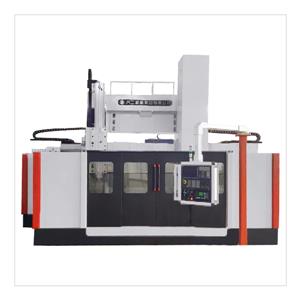
The spindle is one of the more sensitive systems to both wear and temperature. Bearing wear can introduce runout that affects surface finish and hole accuracy long before it causes an audible or visible fault. Spindle cooling systems — where equipped — depend on clean coolant and unobstructed flow to function as designed; a partially blocked or degraded cooling circuit can allow thermal drift to creep back in even on a machine designed to compensate for it. For manufacturers running long, continuous heavy-cutting cycles, confirming that spindle cooling and lubrication are performing to specification is one of the more direct ways to protect precision on a vertical turning machine tool when machining large workpieces.
4. Tooling and Workholding Also Belong in a Maintenance Plan
Machine accuracy isn't the sole factor that determines the quality of the end product. Worn tool holders, damaged clamping mechanisms, or a hydraulic chuck that is losing its clamping power could bring in some inaccuracies that may look like machine failure but are actually the work of such holders/clamps/ chucks.
Heavy and large workpieces mainly require very good workholding not only for precision, but also for the safety of the operators during setups. By incorporating tooling and workholding inspection as part of a regular maintenance - instead of only tackling them if a part is rejectable at the inspection - it becomes easier to distinguish authentic machine issues from other things that could have happened at one phase of the process.
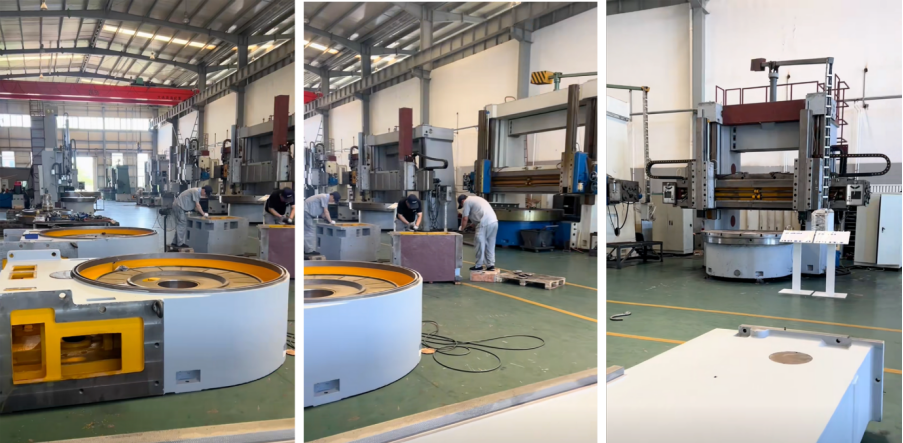
5. Building a Maintenance Rhythm, Not Just a Maintenance Checklist
Maintenance should not be regarded simply as an annual task list, but as a recurring rhythm tied to your real usage. Maintenance includes a mixture of different types of checks: routine tasks that have to be done at certain intervals regardless of your workload (lubrication, filter checking, external inspection), monitoring of work and machine state by checking usage hours or cutting load (guideway backlash, spindle runout, coolant condition), and checking and adjusting the machine accuracy on a regularly basis with a known reference, especially after an unusually heavy cutting or after repairs. If you keep a simple maintenance log — what was done, when was it done, and what was discovered — it can help you to identify a gradual trend before it affects the production process, and in many cases such information is worth more than the actual inspection.
6. When Maintenance Is No Longer Enough
Maintenance helps maintain a machine's original accuracy, but it cannot offset if the machine's setup differs from the present production needs. If a correctly maintained machine cannot still do the current task or precision the workpiece requires, then, in fact, the question is not about maintenance but upgrade of the equipment. It is a choice of finding the actual distance between the current machine and the requirements, as described in our article on things to consider before deciding to upgrade your existing CNC machine. Maintenance and the decision making of upgrading are therefore better considered as two stages of the same equipment lifecycle rather than separate topics: the first - maintenance - is the way of guarding a machine's accuracy that it was built to deliver while the second - the upgrade decision - refers to what occurs after that accuracy is no longer enough for the job.
Conclusion
Long-term machining precision is not only a function of how a machine was originally designed and built. It also depends on whether guideways, transmission systems, spindles, tooling, and workholding are maintained consistently enough to preserve that original capability. For manufacturers running large, heavy-duty machining tasks over long cycles, a structured maintenance rhythm — combining routine tasks, condition-based checks, and periodic accuracy verification — is a practical way to protect production quality over the equipment's working life.
If you would like to discuss maintenance practices for a vertical turning machine tool or evaluate whether your current equipment still matches your production requirements, feel free to contact Dalian Waji.