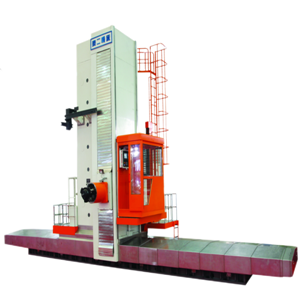
How to Choose a Floor Type Milling And Boring Machine for Large and Complex Workpieces
When a component is too large for a conventional machining center, the challenge is not only cutting power. The machine must provide enough working travel, structural rigidity, spindle capacity, workholding flexibility and CNC control to complete multiple operations accurately.
What Is a Floor Type Milling And Boring Machine?
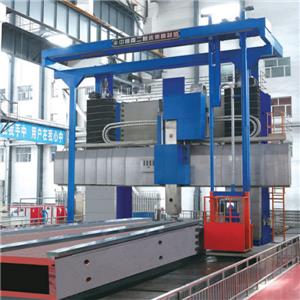
A Floor Type Milling And Boring Machine is a heavy-duty machine tool designed for machining large and complex components. Unlike a conventional machining center built around a compact table and enclosed working area, a floor-type configuration uses a large floor-mounted machining area and a moving column or related structural arrangement to provide long travel and access to oversized workpieces.
The machine can combine milling and boring operations and, depending on its configuration and accessories, may also perform drilling, reaming, tapping, groove machining and other processes. This multi-process capability can reduce the number of times a large workpiece must be repositioned.
For manufacturers of heavy machinery, energy equipment, shipbuilding components, mining equipment, transportation equipment and other large industrial parts, the ability to machine a large component after a single major setup can have a direct effect on production time and positioning accuracy.
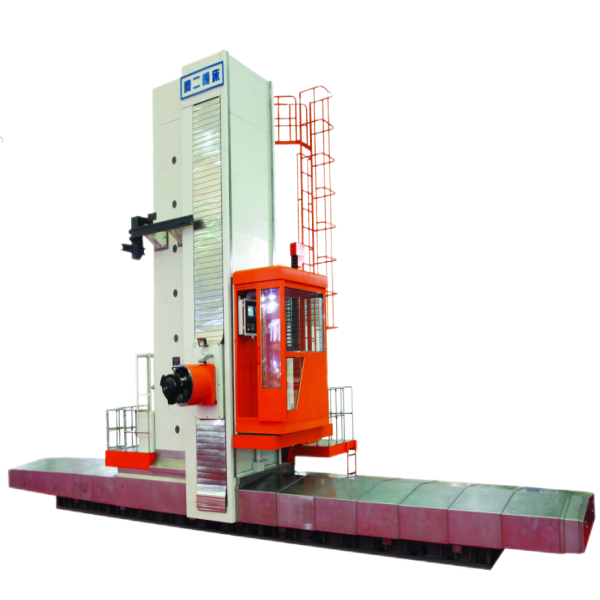
Why Use a Floor-Type Machine for Large Workpieces?
1. Long machining travel
Large components may require several meters of travel. A floor-type architecture allows the machine to be designed around long X-axis movement and substantial headstock or ram travel. This is especially valuable when the workpiece cannot be conveniently rotated or moved between machines.
2. Low and stable working arrangement
Large workpieces can be positioned directly on a foundation or floor-mounted workholding system. This can create a practical arrangement for oversized components that would be difficult to place on a conventional machining table.
3. Milling and boring in one machining system
A major advantage is process consolidation. A component may need face milling, hole boring, drilling, reaming and other operations. Completing more of these operations without moving the workpiece can reduce setup time and the risk of accumulated positioning errors.
4. Suitable for heavy cutting
Large components often require high cutting forces. Structural rigidity, spindle power, spindle diameter, guideway design and machine foundation all influence the machine’s performance. A heavy-duty machine should be selected based on the actual material-removal requirements rather than on spindle power alone.
What Can a CNC Floor Type Boring Milling Machine Do?
A modern floor type boring milling machine can be configured for a broad range of machining processes. Depending on the selected spindle, head, accessories and CNC configuration, common operations include:
Face milling and surface milling
Precision boring of large holes
Drilling and reaming
Tapping and internal-thread machining
Slot and groove machining
Complex contour machining
Machining of large box-shaped and structural components
Multi-axis machining when the selected CNC and machine configuration support it
The main commercial benefit is not that the machine performs every possible operation. The real benefit is the opportunity to consolidate several operations that would otherwise require multiple machines, fixtures and repositioning steps.