
Multi-Station Tool Turret on Vertical Lathes: What Five Stations Buy
24-11-2026
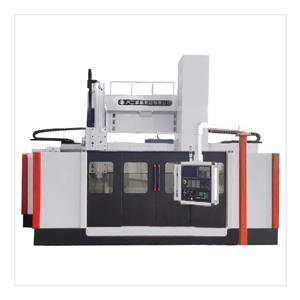
The turret in the photograph sits on the ram of a single column vertical lathe, directly above the rotary table. The index dial is marked from 1 to 5, and two of those stations currently carry a square four-hole tool block and an angled boring bar holder. On a vertical machine the vertical lathe turret is the part that decides how many operations a workpiece can finish before it has to be lifted off the table again.
What Does a Multi-Station Tool Turret Change on a Vertical Lathe?
On a horizontal lathe a tool turret is taken for granted. On a CNC vertical lathe the tool turret hangs on the ram above the table, and every station it carries is one more operation that can be completed in the same clamping.
· Roughing and finishing of the outside diameter without a second setup.
· Boring after facing, on the same centre line, without re-chucking.
· Drilling, chamfering and face grooving without sending the part to a second machine.
· Fewer crane lifts, fewer alignments, less risk of a datum shift between operations.
For a ring that weighs several tons, each re-clamping is a crane lift, a dial indicator and an argument with the clock. That is the real argument for a multi station tool turret, and it has nothing to do with spindle speed.
Why Does Tool Count Decide Cycle Time More Than Cutting Speed?
Buyers compare maximum spindle speed first, because it is the number printed on the brochure. On a large vertical lathe, cutting time is rarely the bottleneck. Non-cutting time is.
Every tool change on a vertical machine costs more than it does on a lathe: the ram has to retract clear of the workpiece, the turret indexes, the next tool approaches, and the operator checks clearance against a part that may be taller than the tool post. A five-station tool turret removes four of those cycles from a part that needs five operations.
The same logic applies to a part that needs one bore and one face: with a single tool holder the operator changes the tool by hand, and the machine waits. With a tool turret the change happens inside the program, in seconds, with the coolant still running.
How Does a Vertical Lathe Turret Index Without Losing Position?
A vertical lathe turret indexes around its own axis and then clamps. Two details decide whether it holds position after a thousand cycles: the coupling that seats the turret, and the clamping force that keeps it seated.
Most production vertical lathe turrets use a toothed coupling — a Hirth or curvic type — that engages two hardened faces with matching teeth. When the turret indexes, the faces separate, rotate and re-engage, and the teeth repeat the position far more accurately than a friction brake could. Hydraulic clamping then pulls the faces together and holds them against the cutting force.
The number that matters for a buyer is repeatability, not absolute accuracy. A turret that repeats to a few microns after every index will hold a bore diameter across a batch. A turret with an impressive first-position accuracy but a weak clamp will drift as the cutting load pushes the tool block.
Where Should Each Tool Sit on a Five-Station Vertical Lathe Turret?
Station assignment is a process decision, not a drawing decision. A workable layout for a single column vertical lathe looks like this:
Station | Typical tool | What it is used for |
1 | Rough turning holder, round insert | Scale removal and stock removal on the outside diameter |
2 | Finishing holder, positive insert | Final diameter, shoulder faces and surface finish |
3 | Long boring bar | Internal bores, deep holes, blind bore bottoms |
4 | Indexable drill | Bolt holes, oil ports and passages |
5 | Face grooving or chamfering tool | Seal grooves, undercuts and edge breaks |
Two rules usually override the table. The heaviest tool goes closest to the turret body, and the longest tool goes where its overhang does not sweep the table or the chuck jaws. On a vertical machine the tool hangs down, so gravity works against the holder rather than helping it.
Tool Changes Eat More Time Than Cuts
Ask anyone who runs a large vertical lathe what slows a shift down. It is not the spindle. It is the machine stopping, the ram backing out, someone swapping a boring bar for a finishing tool, and the part going back under the dial indicator before the next cut.
A tool change on a machine this size is not a two-second index. The ram has to clear the workpiece first. The turret turns, the next tool comes in, and the operator still checks that a bar hanging well out of the holder will not catch the chuck jaws on its way down.
When a job needs five operations, a five station turret takes four of those stops out of the day. Not four tool changes that get faster.
Coolant and Chips: The Vertical Advantage and Its Trap
Gravity helps a vertical lathe. Chips fall away from the cutting zone onto the table instead of piling on the tool, which is why vertical turning produces a cleaner finish on deep bores than horizontal turning of the same diameter.
The trap is the bore itself. In a deep hole, chips and coolant have to come out the way they went in. Through-tool coolant, a steady flow at the right pressure and a boring bar with adequate flute clearance matter more than the turret's clamping force. If a multi station tool turret is plumbed with a single low-pressure line, deep bores will be limited by chip evacuation long before the machine reaches its power limit.
Check three things before ordering: whether coolant is delivered through the tool holder or only through external nozzles, whether each station can be fed separately, and whether the turret has a chip guard that keeps swarf out of the index coupling.
What Should Be Checked Before Adding a Vertical Lathe Turret to an Existing Machine?
· Ram interface: bolt pattern, pilot diameter and the flatness of the mounting face.
· Available hydraulic pressure and flow for indexing and clamping.
· Control interface: how many tool stations the machine's PLC or CNC can address, and whether the turret needs a dedicated M-code set.
· Interference envelope: maximum tool length against the table, the column and the chuck jaws.
· Tool weight per station, and the balance of the turret with the heaviest block fitted.
· Coolant supply per station, and whether through-tool coolant is required.
Retrofitting a vertical lathe turret onto an older single column vertical lathe is common, but it is a geometry and control job as much as a mechanical one. The mounting face has to be checked for flatness before the turret goes on; a turret bolted to a worn face will repeat well on the bench and cut poorly on the machine.
Three Mistakes Buyers Make When Specifying a Vertical Lathe Turret
· Counting stations before counting tools. Six stations that cannot hold the boring bar you need are worse than four that can.
· Forgetting the facing head. If a facing head or a large tool block has to swing past the table, the turret body may be the part that interferes, not the tool.
· Ignoring the tool change logic. A turret with five stations and a control that only addresses three is a five-station turret that behaves like a three-station turret.
Next Step
Send the workpiece drawing, the operation list and the largest tool you intend to mount. Our engineering team will confirm the station count, the tool block arrangement and the ram interface for your CNC vertical lathe, and return a quotation with the turret layout drawing.