What Should Manufacturers Consider Before Upgrading an Existing CNC Machine
When assessing a used CNC machine, whether it can continue to machine parts or not is just one factor in the evaluation of the equipment. With changes in the nature of workpieces, machining goals, the desire of precision, or even the timeline for production, the original setup of the machine might eventually turn into bottleneck for production.
To put it in more concrete terms, maybe a machine builder had a relatively restricted product mix that they were producing on the old machine, and the machine could do most of those jobs reliably. If there are changes in the order, the workpiece might get bigger, or more complex structurally and the content of machining might require different tools.
At this point, it would take the original machine many setups to get a particular job done while some operations would require extra workholding, positioning, or even moving the workpiece to another machine. In such cases, it might be preferable to replace the original machine altogether.
Hence, before a manufacturer contemplates upgrading a CNC machine they should pinpoint differences between their current equipment and production level, and only then decide on whether to proceed with an upgrade or purchase new equipment.
1. Why Can the Original Machine No Longer Meet Current Requirements?
A machine usually needs to be reevaluated not because it suddenly “stops working,” but because production requirements have changed.
· First, look at the workpieces being processed today. Are their size, weight, structure, and machining requirements different from those when the machine was first put into use? If the workpieces have become more complex or require more machining steps, limitations in the original configuration may gradually become apparent.
· Second, look at the production process. Are operations that once ran smoothly now requiring frequent changes in workholding, repositioning, or workpiece transfer?
If customers now have higher requirements for machining quality, manufacturers also need to confirm whether the existing CNC machine can still meet current precision and stability requirements.
Therefore, before upgrading, the first step is to identify what has changed and why the original equipment is starting to affect production.
2. Identify the Gap Between the Existing Machine and Current Requirements
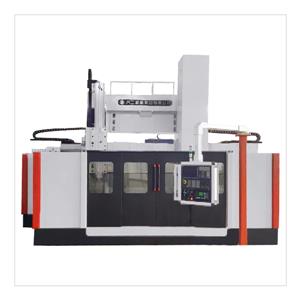
Once the problem is identified, the existing equipment should be compared with current production requirements, including whether a vertical turning center can meet the workpiece and machining requirements.
Three areas are particularly important:
· Does the machining range match the workpiece size and machining areas?
· Can the tooling, workholding, and positioning methods support current tasks?
· Can the machine adapt to the new machining process?
Manufacturers should consider the actual constraints of production too, such as machining hard corners, workpieces moving to another machine, or tasks requiring constant readjustments.
Looking into these aspects can show what the machine is missing. If the deficiency is minor and can be fixed with some specific changes, an upgrade might be the way to go. On the other hand, if several essential functions are not sufficient anymore, bringing in new equipment as a comparison is recommended.
3. Not Every Production Problem Requires a Machine Upgrade
A problem with the equipment does not necessarily mean that the machine itself needs to be upgraded. Low production efficiency may come from the machining process, repeated adjustments may be related to tooling, workholding, or positioning, and some issues may come from operating procedures or production organization.
Therefore, before considering a CNC machine upgrade, manufacturers should first ask: Is the problem caused by insufficient machine capability, or are the existing processes not being used effectively?
As an illustration, let's say the machine can actually perform the workpiece but the manufacturer still gets into trouble every time they have to make a change and the cause of the problem is confirmed to lie in capability or configuration limitations of the machine, then the manufacturers can compare the options of upgrading versus buying a new piece of equipment.
Manufacturers should, therefore, first investigate the source of the issue as it may be related to work-clamping, positioning of the tool/workpiece, or other arrangements related to the process rather than a machine limitation.
The above action minimizes unnecessary upgrades for the sake of it and at the same time it helps manufacturers to invest their capital in resolving primary issues that cause production losses.
4. Can the Upgrade Actually Solve the Problem?
Once the problem is confirmed to be related to machine capability, manufacturers also need to determine what practical changes the upgrade will bring.The value of an upgrade is not simply in adding a function, but in solving an identified problem. For example, can the upgraded machine handle new machining tasks, reduce unnecessary adjustments, or make an easily interrupted process run more smoothly?
If the upgraded capability still cannot cover key machining requirements, further investment may not solve the fundamental problem.
Manufacturers are thus able to determine the difference between the production process prior to and following the upgrade:
The main question is, what are the new opportunities after the upgrade, e.g. limiting factors that can be removed, changing steps, and whether the upgraded equipment can still meet current requirements? If the upgrade is restricted to a narrow area (e.g. the machine is not affected, only the control unit is modernized), maybe, after all, completely new equipment is a better solution?
5. Look Beyond Upgrade Costs and Consider Long-Term Value
The choice between upgrading and purchasing new equipment should not be based only on current investment. Future production requirements also need to be considered.
If the current machine can still take care of the majority of production tasks and the issue is clearly defined, then it might be reasonable to make a specific upgrade. But if the manufacturer is currently handling more kinds of workpieces or is planning on machining requirements constantly changing in the future, then it's a good idea to give some thought to the versatility of the new equipment.
Cheap upgrades might fix a problem temporarily, yet new restrictions can pop up as time goes on and this may result in a greater need for changes and expenditures.
Therefore, buyers should consider not only current costs, but also future workpiece types, production methods, machining content, and equipment configuration.
6. When Should Manufacturers Reconsider Purchasing a New CNC Machine?
When the gap between existing equipment and production requirements becomes significant, manufacturers may need to consider purchasing new equipment rather than continuously adding upgrade projects.
In case that some essential capabilities do not any longer cover present tasks, or limitations of machining range, process integration, or configuration exist after fine-tuning, further investment probably will only delay the issue. Should the variety of workpieces and machining demands keep shifting when the current equipment is already hard to adjust, deciding to go for new CNC machine setup probably would be a more logical choice.
It certainly doesn't imply that getting a new machine will always be a better alternative from a business perspective than replacing the present one with a much older model which has been upgraded. The actual matter is - which one, between, will be able to cover present needs much better and also still have room for changes for the times ahead.
Therefore, purchasing new equipment, such as a vertical turning center, should not be based only on machine specifications. Buyers should consider the workpiece, machining process, and production method when determining the most suitable configuration.
Conclusion
For manufacturers, deciding on whether to upgrade a current CNC machine really revolves around the equipment and production requirements match at the moment.
The decision process can be summarized as:
Existing machine → Current requirements → Identify the gap → Determine the source of the problem → Evaluate the upgrade → Compare long-term needs → Decide whether to upgrade or purchase a new machine.
Replacing machinery can be a proper decision if the current one has a reliable production base and minor changes are sufficient to address key issues. However, if the basic competencies of the equipment can't keep pace with newly machining demands, switching to a brand new model would be definitely the right path.
If you are evaluating whether your existing equipment is still suitable for current machining tasks, or need to reconsider a vertical turning center configuration based on new production requirements, feel free to contact us to discuss a suitable equipment solution based on your actual workpieces and machining requirements.