
From HT300 to Stress Relief: Unveiling the Source of Long-Term Stability in High-Quality Vertical Lathe Beds
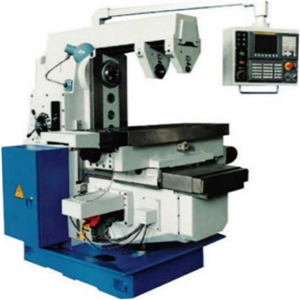
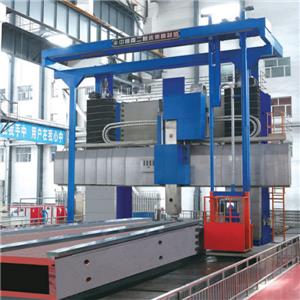
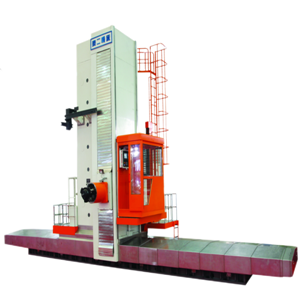
For any machine tool—particularly high-precision equipment such as the TK69 Series CNC Floor-Type Milling and Boring Machine—the stability of the machine bed determines its ultimate machining capabilities. Dalian Waji insists on prioritizing the fundamentals—raw materials and heat treatment processes—to ensure that every piece of equipment leaving our factory maintains stable geometric precision for a decade or even longer.
Why Does Dalian Waji Prefer HT300 High-Strength Gray Cast Iron?
The machine bed casting serves as the "skeleton" of Dalian Waji’s products. We source our HT250–HT300 gray cast iron from the state-owned enterprise, Dalian Xiangsu.
Vibration Resistance:
Compared to welded steel structures, HT300 possesses excellent internal damping properties, allowing it to effectively absorb high-frequency vibrations generated during the cutting process. This characteristic is critical for achieving superior surface finishes on our CNC Fixed-Column Milling and Boring Machines (GM21/24 Series).
Thermal Stability:
HT300 features a relatively low and uniform coefficient of thermal expansion, which effectively minimizes structural distortion in workshop environments subject to significant temperature fluctuations.
High Hardness:
The overall hardness of our castings exceeds HB180, establishing a solid physical foundation for the wear resistance of the machine's guide rails.
Multi-Stage Aging Process:
Thoroughly Relieving Casting Stress.
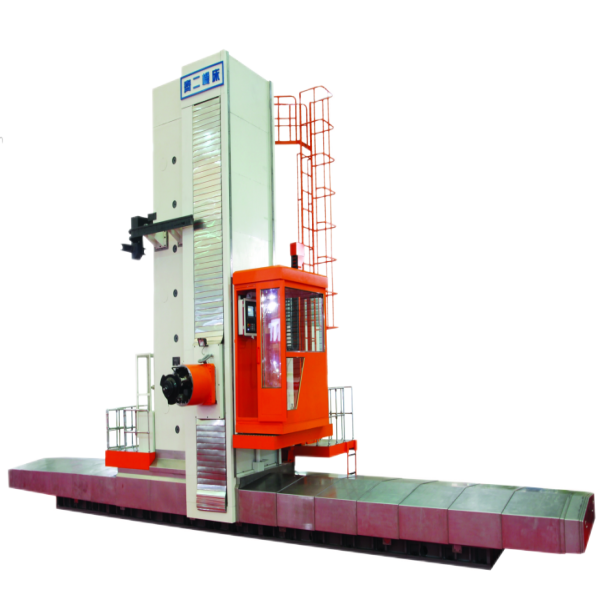
Castings accumulate significant residual stress during the cooling process; if this stress is not relieved, the machine tool will undergo irreversible micro-deformation during operation. Dalian Waji has established a rigorous, three-step heat treatment protocol:
Primary Aging:
The raw casting blank undergoes high-temperature annealing in a large-scale aging furnace, utilizing thermal expansion and contraction to relieve over 90% of the original internal stress.
Secondary Aging (Post-Rough Machining):
After the machine bed for the TK61 Series CNC Horizontal Boring and Milling Machine undergoes heavy-stock rough machining, a second stress-relief treatment is performed. This ensures that the structure reaches a state of maximum physical stability before proceeding to the precision finishing stage. Natural Aging: Critical components undergo a prolonged period of natural outdoor storage, utilizing natural temperature fluctuations to further stabilize their metallic molecular structure.
Column Ribbing Design: Balancing Geometric Rigidity and Symmetry.
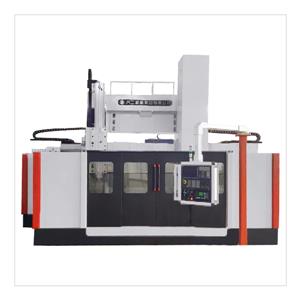
In the design of our Ordinary Single-column Vertical Lathes, we focus not merely on material thickness but also—through the scientific layout of reinforcing ribs—optimize the section moment of inertia. This honeycomb or X-shaped ribbing design not only enhances static rigidity but also ensures exceptional structural symmetry during thermal expansion, thereby preventing the loss of precision that would otherwise result from the column tilting toward one side.
Machine tool stability is not achieved overnight; rather, it stems from the rigorous control exercised over every kilogram of cast iron and every hour of heat treatment. By pushing the performance limits of HT300 material to the absolute maximum, Dalian Waji infuses heavy-duty equipment—such as our Series CNC Horizontal Boring and Milling Machines—with an enduring spirit of precision.