
How to Choose a CNC Vertical Lathe for Large and Heavy Workpieces (1)
Selecting a CNC vertical lathe for large and heavy workpieces is not simply a matter of choosing the machine with the largest table diameter or the highest spindle power. For heavy-duty machining, the machine structure, workpiece weight, table torque, machining diameter, turning height, tool travel, cutting force, spindle speed range, guideway design, CNC system, and production requirements must all be considered together.
For manufacturers working with large bearings, gears, valves, flanges, turbine components, wind power components, heavy machinery parts, and other oversized components, the wrong machine configuration can lead to poor cutting stability, excessive vibration, inefficient setup, reduced tool life, and unnecessary investment.
A properly selected CNC vertical lathe, by contrast, can provide a stable platform for machining large-diameter and relatively short-height components while improving workpiece accessibility and production efficiency.
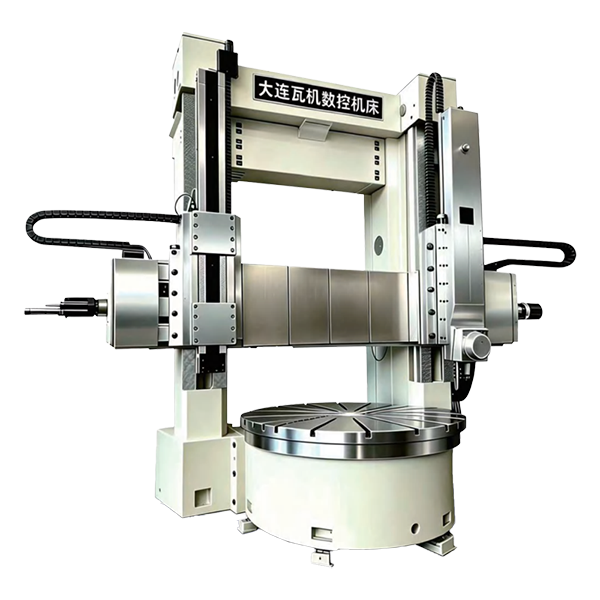
What Is a CNC Vertical Lathe?
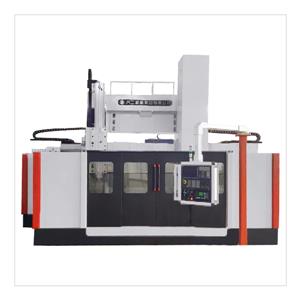
A CNC vertical lathe is a machine tool in which the workpiece is mounted on a horizontal rotary table while the spindle and cutting tools operate in a vertical machining arrangement.
This configuration is particularly suitable for large-diameter workpieces because gravity helps keep the workpiece seated on the table during loading and machining. Compared with a conventional horizontal lathe, a vertical turning configuration can make the positioning and clamping of large, heavy components more practical.
A CNC vertical lathe can perform operations such as:
· External cylindrical turning
· Internal cylindrical turning
· Face turning
· Grooving
· Chamfering
· Taper turning
· Boring-related turning operations
· Heavy roughing
· Precision finishing
The actual machining capability depends on the machine configuration, tooling, CNC system, spindle characteristics, and available accessories.
For large workpieces, the vertical structure is especially valuable because the machine is designed around a large-diameter rotary table rather than requiring a long horizontal bed to support the entire workpiece.
Why Choose a CNC Vertical Lathe for Large Workpieces?
The first question a buyer should ask is not "What is the largest CNC vertical lathe available?" but rather "What type of workpiece will this machine need to process?"
Large and heavy components often have a combination of characteristics:
· Large outside diameter
· High workpiece mass
· Relatively short axial length
· Large machining allowance
· High cutting-force requirements
· Large material-removal requirements
· Complex internal and external surfaces
· Tight dimensional requirements
A vertical turning configuration can be particularly appropriate for this type of production.
For example, a large bearing ring may have a significant diameter but relatively limited height. A vertical turning machine allows the component to be positioned directly on the worktable, where it can be securely supported while the tool performs the turning operation.
The same principle applies to many large valves, gears, flanges, wheel components, and energy-industry components.