Top-Rated Vertical Machining Centers for Small Workshops
For many startup machining plants, mold repair shops, or contract manufacturing workshops specializing in "high-mix, low-volume" production, every square meter of floor space is extremely precious. In such an environment, acquiring a Vertical Machining Center (VMC)—one that guarantees industrial-grade machining precision without occupying excessive space—is often a pivotal step for a business to achieve a breakthrough in profitability.
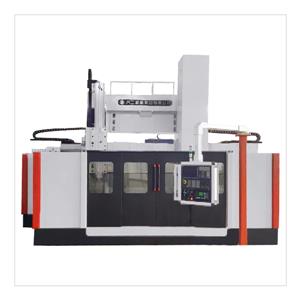
The Four Golden Rules for Workshops When Purchasing a "Large CNC Vertical Lathe (VTL)".
For workshops preparing to expand their machining operations into heavy-duty parts (such as wind turbine bearings, flanges, or mining machinery bases), purchasing a large CNC vertical lathe represents a significant investment. How can one ensure that the acquired equipment neither results in wasted capacity nor proves incapable of tackling those "tough-to-crack" orders? We recommend conducting an evaluation based on the following four core data-driven principles:
Rule 1: Match "Machining Diameter and Load Capacity" Limits to Your Core Orders.
When machining heavy-duty rotational parts, the primary consideration is whether the machine tool possesses sufficient capability. During the selection process, the maximum machining diameter and the maximum load capacity of the worktable serve as the initial screening criteria.
Selection Data Reference: Based on the specifications of our industrial-grade CK series vertical lathes: if your workshop primarily machines medium-sized flanges or pump bodies, you might select the CK578Fx model (max. cutting diameter: ϕ800mm; max. load capacity: 2 tons)—a machine with a net weight of 8.5 tons and a relatively compact footprint. However, if you are targeting wind turbine main bearing housings or large-scale hydro-turbine runners, you must upgrade to the CK5116Fx or CK5120Fx models (max. cutting diameter ranging from ϕ1600mm to ϕ2000mm; max. load capacity ranging from 5 to 8 tons). Only when the worktable possesses sufficient load-bearing redundancy can the absolute safety and precision of heavy-duty parts be guaranteed during high-speed rotation.
Rule 2: Prioritize "Heavy-Duty Torque and Cutting Force," and Assess Ram Rigidity.
For hard forged steel or surface-hardened alloy castings, the machine tool must possess an exceptionally high Metal Removal Rate (MRR); this capability depends directly on the spindle torque and the structural rigidity of the tool holder assembly.
Selection Data Reference: High-quality vertical lathes are typically equipped with heavy-duty transmission systems and high-torque gearboxes. Taking Dalian Waji (DALIAN WAJI) as an example, the main motor power on their large-scale models can reach 45 kW, the maximum table torque can soar to an astonishing 30,000 N·m, and the maximum cutting force can reach 25,000 N.
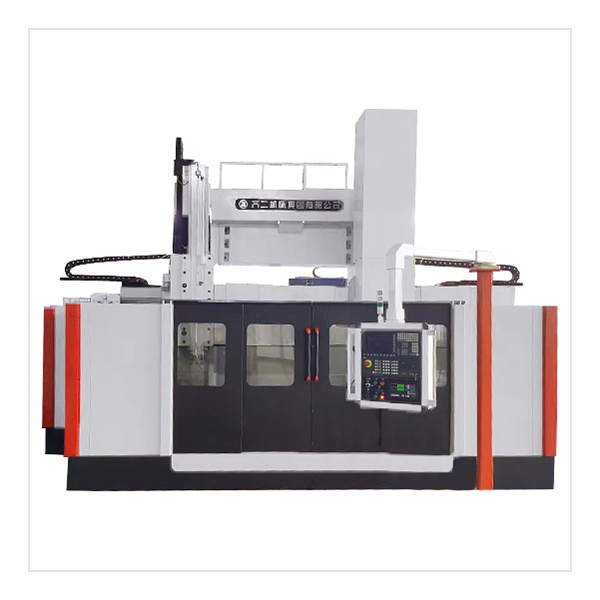
Structural Core: Pay close attention to the design of the "ram." It is highly recommended to select equipment featuring a high-rigidity Square Ram paired with large-cross-section turning tool holders (e.g., 40×40 mm); this ensures that the spindle will neither stall nor deflect—even during extreme interrupted cutting operations (such as machining crusher bases).
Rule 3: Understand "Guideway Technology and Thermal Symmetry" to Ensure Long-Term Precision.
When workpieces weighing over ten tons are clamped to the table and subjected to continuous rotational machining, traditional metal-on-metal friction guideways will wear out rapidly, leading to a loss of precision.
Selection Data Reference: Regarding guideway configuration, mainstream standard models typically feature high-response Linear Guide Rails to facilitate fine machining operations. Conversely, for ultra-heavy workpieces, high-end models employ advanced Constant-Pressure Hydrostatic Guideway technology. This technology generates a high-pressure oil film between moving components, thereby completely eliminating metal-to-metal contact; consequently, geometric precision remains virtually undiminished—even after decades of continuous use.
Furthermore, it is crucial to verify whether the machine tool's column utilizes a "Thermally Symmetrical Structural Design" (such as the single-piece cast column and large-cross-section ram—up to 500×500 mm—adopted by Dalian Waji). When combined with an adaptive counterweight system, this design ensures that the machine tool can operate under heavy loads 24/7 without thermal expansion causing workpiece dimensions to drift out of tolerance.
Rule 4: Balance Operational Accessibility with Automation Potential—Choose the Right "CNC System."
Even with heavy-duty machine tools, the more widely adopted a control system is, the faster operators can master it; this, in turn, lowers the costs associated with recruitment and training within the workshop.
Selection Reference: Reputable machine tool suppliers typically offer a variety of system options. Depending on your workshop operators' familiarity or your budget, you may choose between the world-class Siemens 828D or the FANUC 0i-TF.
To minimize non-cutting time, you may opt for Full Closed-Loop Control to achieve zero-error machining, or equip the machine with a 4-Station Tool Turret—a feature that significantly reduces both the auxiliary time required for tool changes and the safety risks associated with operators having to climb up and down the machine.