
What Materials Can Be Milled Vertically?
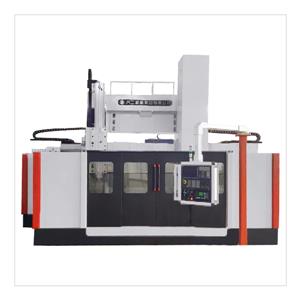
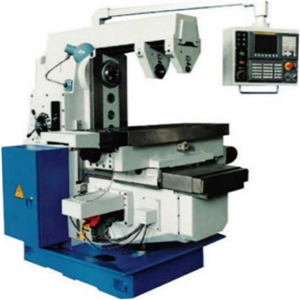
Vertical milling is a widely utilized machining method in which the spindle is oriented perpendicular to the worktable. Offering excellent visibility and operational flexibility, this configuration allows it to process almost the entire spectrum of common industrial materials.
Classification and Characteristics of Materials Suitable for Vertical Milling:
1. Metal Materials:
Metals are the most common materials processed on vertical milling machines. Depending on the material's hardness and machinability, it is essential to select appropriate cutting tools (such as carbide or high-speed steel) and cutting parameters (spindle speed, feed rate, and coolant):
·Aluminum and its Alloys: Possess excellent machinability and rapid heat dissipation; they are among the most frequently used materials in CNC machining, suitable for applications in aerospace, automotive, and electronic enclosures.
·Steel: Includes carbon steel and alloy steel. The difficulty of machining depends on the material's hardness and carbon content. Vertical milling machines are frequently used to process these materials in mold manufacturing and mechanical component production.
·Stainless Steel: Offers excellent corrosion resistance but is prone to work hardening during machining and generates significant cutting heat; consequently, it requires high-rigidity machine tools and specialized cutting tools.
·Copper, Brass, and Bronze: Exhibit good ductility as well as excellent electrical and thermal conductivity; the cutting process is typically quite smooth.
·Titanium Alloys: Characterized by high strength, high-temperature resistance, and corrosion resistance; however, they are classified as "difficult-to-machine materials" due to poor thermal conductivity, which poses significant challenges to tool life. Processing requires high torque and an efficient cooling system.
·Cast Iron: Possesses good rigidity but is highly brittle; machining generates fine, powdery chips.
2. Plastic Materials:
Plastics generally perform well in vertical milling operations, though careful control of cutting heat is required to prevent melting or deformation of the material:
·Acrylic: Features high transparency. During machining, tools must be kept sharp and the spindle speed appropriately set; otherwise, the cut edges may become discolored (whitened) or melt.
·Nylon: Offers good toughness and machinability, though attention must be paid to potential issues regarding dimensional stability caused by moisture absorption.
·Polycarbonate: Exhibits high impact strength, transparency, and durability.
·POM (Acetal): Possesses high mechanical strength and excellent machinability; it is widely used in the production of gears and precision components.
·PEEK: A high-performance engineering plastic known for its high heat resistance, widely used in the medical and aerospace sectors.
3. Composite Materials.
The primary challenges when machining composite materials are abrasiveness and delamination:
Carbon Fiber Reinforced Composites: Extremely hard and highly abrasive to cutting tools; diamond-coated tools are typically required.
Fiberglass: Highly abrasive in nature.
4. Wood.
Hardwoods and Softwoods: Vertical milling machines (or engraving machines) can precisely machine various types of solid wood.
Wood Panels: Such as MDF (Medium-Density Fiberboard), plywood, etc. Machining wood typically requires higher spindle speeds.
Key Considerations When Selecting Materials:
Before deciding to proceed with a vertical milling operation, you must evaluate the following key points:
· Machinability: Is the material easy to cut? (For example, aluminum is easier to machine than titanium).
·Rigidity and Clamping: Is the workpiece geometry suitable for secure fixturing on the machine tool? Parts that are too thin or have complex shapes may experience vibration during machining.
·Tool Selection: For different materials (varying in hardness and viscosity), it is essential to select end mills with the appropriate material composition (High-Speed Steel, Carbide, PCD) and cutting geometry.
·Thermal Management: Certain materials (such as plastics and titanium alloys) are heat-sensitive and require specialized cutting fluids or compressed air for chip evacuation and cooling.
·Chip Management: Chip evacuation in vertical milling typically relies on flushing with cutting fluid or manual cleaning; the methods used to handle metal chips (which are heavier) differ from those used for plastic chips (which are prone to static buildup).