
What Is the Working Principle of Vtl (Cnc Vertical Lathe)? ——in-Depth Analysis and Selection Guide for Heavy Machinery Processing (1)
Why heavy industry cannot do without VTL vertical lathes?
In modern industrial manufacturing, from wind turbines to deep-sea navigation ships to spacecrafts that explore the universe, behind these important equipment of the country are inseparable from a core processing equipment - CNC Vertical Turning Lathe (VTL).
Traditional horizontal lathes are often unable to process large-diameter, heavy and asymmetrical workpieces. Excessive overhang stress, spindle deflection and extremely difficult workpiece clamping process not only reduce the machining accuracy, but also bring serious safety hazards.
This ultimate guide compiled by a team of experts with decades of experience in heavy machine tool manufacturing (such as DALIAN WAJI CNC MACHINE) will reveal to you how vertical turning technology can achieve micron-level machining accuracy through "gravity advantage" and sophisticated CNC systems.
1. What is a VTL (vertical lathe) machine?
1.1 Definition and core structure of VTL
VTL stands for Vertical Turning Lathe. As the name suggests, the biggest difference between it and a traditional horizontal lathe is the physical orientation of its spindle (Spindle) and workbench (Table).
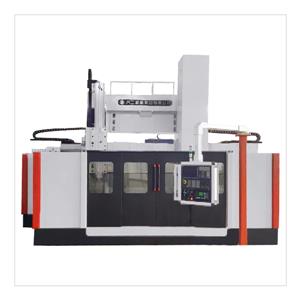
In a horizontal lathe, the spindle is placed horizontally and the workpiece is suspended and rotated on the chuck; in a VTL, the spindle is oriented vertically and the worktable is placed horizontally on the ground or base. The workpiece is placed and clamped directly on the horizontal rotating table as if it were placed on a dining table. The cutting tool is installed on a tool holder that can move in the X-axis and Z-axis through a vertical ram (Ram) and a crossbeam (Crossbeam) to cut the rotating workpiece.
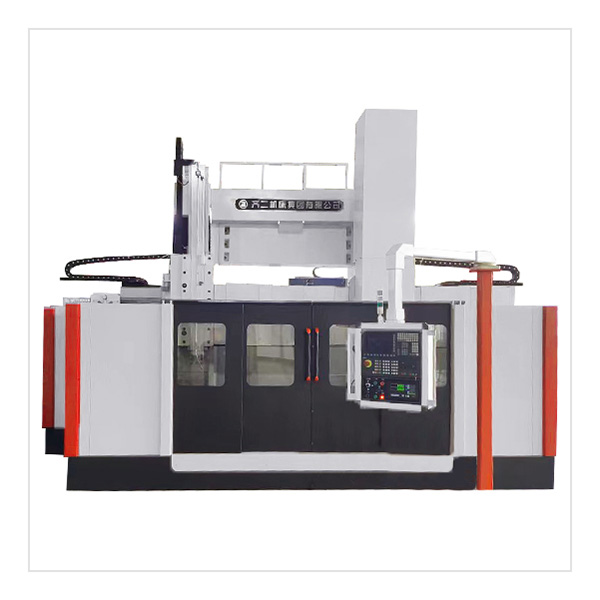
1.2 Industrial Positioning: Designed for “Big Guys”
VTL is not designed for processing slender shaft parts. Its core battlefield lies in workpieces with "large diameter, large weight, and short length (height)". For example:
·Wind turbine hubs.
·Aerospace rings, oil & gas flanges.
·Marine propeller housings.
·Heavy-duty mining crusher bases.
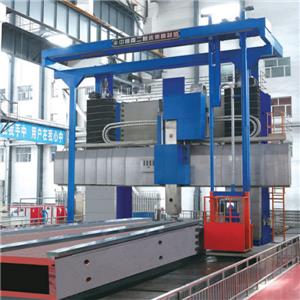
Take DALIAN WAJI's heavy-duty CNC vertical lathe as an example. Its powerful load-bearing capacity enables it to easily handle giant workpieces with a rotation diameter of several meters and a weight ranging from 2 tons to dozens of tons.
2. The absolute working principle of VTL machine.
2.1 Core principle one: "The Gravity Advantage" and clamping stability.
In a horizontal lathe, the center of gravity of a heavy workpiece is suspended in the air, and gravity pulls it downwards, making it difficult to center the workpiece and prone to dangerous centrifugal force and vibration when rotating at high speeds.
VTL cleverly takes advantage of Earth's gravity. As DALIAN WAJI emphasized, VTL uses gravity to naturally and smoothly press oversized workpieces on the hydrostatic rotary table by positioning the spindle vertically.
· Clamping is extremely simple and safe: the crane only needs to lower the heavy object vertically, and gravity can assist in the alignment and positioning of the workpiece, greatly reducing setup time and manual intervention.
· Eliminate overhang stress: The weight of the workpiece is completely borne by the solid workbench and foundation below, completely eliminating the risks of workpiece sagging and deformation that are common in horizontal machining.
2.2 Core Principle 2: Zero Spindle Deflection
The vertical structure of the VTL fundamentally eliminates the physical conditions for spindle deflection. Because the weight distribution is axially downward, it is transferred directly to the thrust bearing or hydrostatic guide. This means that even when performing aggressive, high-torque interrupted cuts (aggressive, high-torque interrupted cuts), the machine can still maintain extremely high rigidity and achieve micron-level machining accuracy.
2.3 Core principle three: Hydrostatic Rotary Table principle.
High-end heavy-duty VTLs (such as Dalian Tile Machine's CK series) are usually equipped with a static pressure workbench. The principle is to inject hydraulic oil into the tiny gap between the workbench and the base through a high-pressure pump, forming an extremely thin but extremely strong high-pressure oil film.
· Friction-free rotation: The heavy workpiece and worktable actually "float" on the oil film, achieving pure liquid friction, greatly reducing wear and extending the life of the machine tool.
·Excellent vibration absorption: The oil film has excellent damping properties and can absorb the huge vibrations generated during heavy cutting, ensuring an ultra-high finish on the machined surface.