Multi-Process Machining of Large Components with CNC Vertical Turning Machines
In the production of large components, a workpiece often goes through multiple machining steps, from entering the machining stage as a blank to achieving its final dimensional and surface requirements. What affects production planning is not only the capability of each individual operation, but also how different operations are connected and how tools, equipment, and workpieces are arranged throughout the process.
When operations such as turning, boring, and facing are required for the same type of component, manufacturers need to consider whether a CNC Vertical Turning Lathe can support more effective organization of different machining tasks when selecting machining equipment.
1. Why Multi-Process Machining Matters for Large Components
For large rotating components, different machining areas usually correspond to different machining tasks. Features such as external diameters, internal bores, and end faces may require different tools and machining methods, so the complete machining process often consists of multiple operations.
This characteristic means that CNC Vertical Turning Lathe selection should not focus on only one machining operation. If a machine can better accommodate multiple operations, it can provide more options for process planning and help reduce repetitive steps in the production process.
2. Where Can Multi-Process Machining Workflows Become More Complex?
The challenges of multi-process machining often occur between operations rather than in the machining itself. If different operations require frequent equipment changes, workpiece repositioning, or manual adjustments, additional organizational work is added to the overall production process.
For larger workpieces, these steps also tend to require more preparation and handling. Therefore, in actual production, manufacturers pay more attention to arranging the machining sequence properly, reducing unnecessary intermediate steps, and maintaining smoother connections between different machining tasks.
3. How CNC and Turret Configuration Help Organize Multiple Machining Operations?
CNC control can manage the machining process according to preset programs, reduce some manual operations, and provide more stable control for repetitive machining. For components that need to be produced repeatedly according to a defined process, this approach helps maintain consistency throughout the machining workflow.
Turret configuration provides greater flexibility from the perspective of tool and process arrangement. Different tools can be configured according to machining tasks for operations such as turning, boring, and facing. In this way, multiple machining tasks can be organized more effectively within the same machining system.
Therefore, the combination of CNC and turret configuration is not simply about increasing the number of machining operations that can be performed. More importantly, it allows the equipment to adapt more flexibly to production tasks involving multiple operations.
4. What Should Be Considered When Selecting a CNC Vertical Turning Solution?
· First, the actual workpiece and its dimensional range should be identified, followed by determining the machining area that the CNC Vertical Turning Lathe needs to cover.
· Second, the required machining operations should be confirmed based on the specific process requirements of the workpiece. If a production task includes turning, boring, and facing, the machine configuration needs to be evaluated to ensure that it can support these different operations.
· In addition, production methods, batch size, and the level of manual involvement should also be considered. For large components with significant differences in specifications, whether the equipment can be configured according to the specific workpiece and production requirements is also an important factor when selecting a solution.
5. Matching Machine Configuration with Actual Machining Requirements
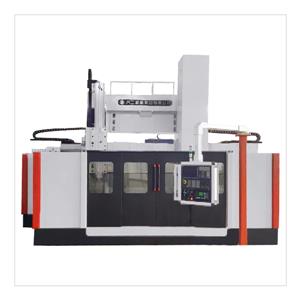
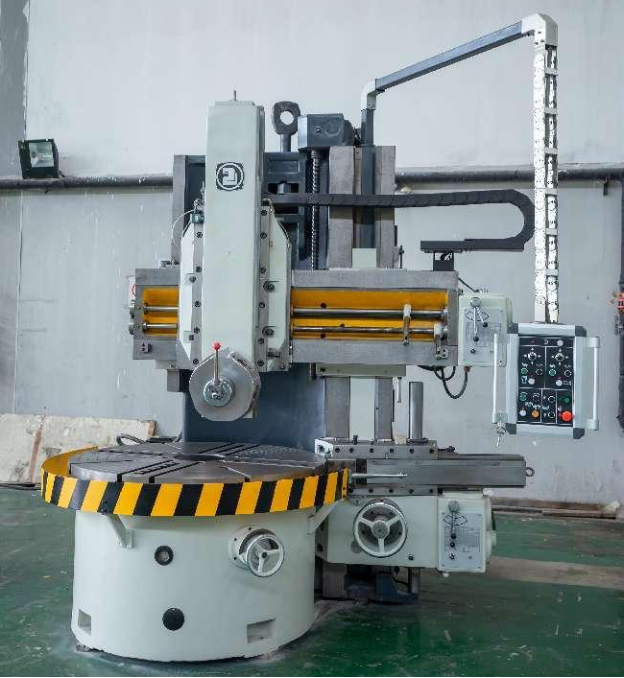
When a machining task involves multiple operations, the machine configuration needs to be matched to the actual process requirements. A CNC Vertical Turning Lathe with a turret structure can be equipped with different tools according to machining tasks and support operations such as turning, boring, and facing, allowing different machining tasks to be arranged more flexibly within the same machining system.
Taking an our industrial CNC vertical turning lathe with turret tool holder as an example, its specifications can be customized according to specific workpiece dimensions and industrial production requirements. For machining large rotating components, the equipment can accommodate different machining operations through its turret configuration, while CNC control can reduce some manual intervention and support stable, repeatable production.
The focus of this configuration approach is not simply to pursue larger machine specifications, but to create a reasonable match between machining range, machining operations, and production requirements, so that the equipment can better adapt to the actual machining processes of different components.
Conclusion
Multi-process machining of large components is not only a matter of performing individual machining operations, but also involves how different operations can be connected in a reasonable way. CNC control and turret configuration provide a more flexible way to organize operations such as turning, boring, and facing, while also allowing the equipment to better adapt to different machining tasks.
Therefore, when selecting a CNC vertical turning solution, manufacturers should consider the actual workpiece dimensions, machining operations, and production requirements, and determine a machine configuration that matches the specific application.
If you are looking for a CNC Vertical Turning Lathe solution for large or complex rotating components, feel free to contact us to discuss your machining requirements and a suitable machine configuration.