
How Floor-Type Milling and Boring Machines Are Evolving for Smarter Manufacturing
As manufacturing methods continue to change, the role of machine tools is also evolving. In the past, when evaluating a cnc floor-type milling boring machine, manufacturers would usually focus on its basic machining capabilities, mechanical structure, and the types of machining tasks it could perform. Today, as manufacturers place greater emphasis on precision consistency, process flexibility, and long-term operating cost, machine tools also need to better adapt to new production requirements.
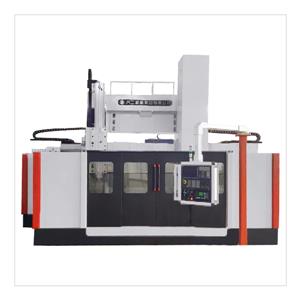
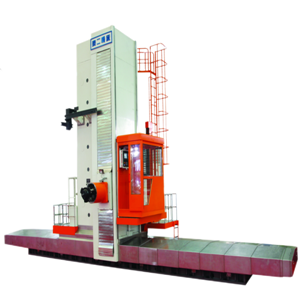
For the TK69 and TH69 series CNC floor-type milling and boring machines, this evolution is reflected less in abstract automation concepts and more in a specific set of verifiable capabilities — multi-axis composite machining, thermal and precision compensation, tool management, configurability, and reliability testing. This article looks at what these machines are actually documented to support. For a broader look at the industry trends behind automation and machine connectivity, see our other two articles on those topics.
1. Multi-Axis Control and Five-Axis Composite Machining
The CNC system on the TK69/TH69 series supports control of up to seven axes, with simultaneous control on any four of them. When a high-precision two-axis swivel milling head is mounted, the machine can achieve simultaneous five-axis motion control. This allows complex contour surfaces, oblique holes, and polyhedral features to be completed in a single setup. Compared with conventional three-axis equipment, this can reduce the number of repositioning and re-clamping operations by 3 to 5 times, which is particularly relevant for large, complex workpieces such as propeller blades or other five-dimensional contour parts.
2. Precision Compensation and Thermal Stability
For long, continuous machining cycles, thermal deformation is a practical concern for dimensional consistency. The spindle system is equipped with an independent circulating cooling unit to control spindle temperature rise, and the guideway and screw lubrication system includes an oil-temperature cooling device to keep oil temperature stable. In addition, the machine supports software-based thermal error compensation, which dynamically corrects coordinate offsets through a model algorithm to help keep part dimensions consistent across batch production. Various compensation functions, combined with digital electro-hydraulic proportional valves, are also applied to help maintain spindle precision.
3. Automatic Tool Changing — Available on the TH69 Series
It is worth being specific here: automatic tool changing is not a standard feature across the whole TK69 base series. The TH69 series CNC floor-type milling and boring machining center includes all TK69 functions plus automatic tool changing, with tool magazine capacity ranging from 40 to 100 tools depending on the model, and customizable on request. Buyers comparing TK69 and TH69 configurations should confirm which series a specific automatic-tool-changing requirement calls for.
4. Configurable to Match the Actual Machining Task
The series offers a range of spindle bore diameters, strokes, torque, and power configurations, so the model can be matched to the primary machining object rather than using one fixed configuration for every workpiece. A library of accessory heads — including vertical milling heads, universal milling heads, and extended milling heads — is available as standard, and combined with a CNC rotary table, the machine can complete five-face machining in a single setup. This configurability makes the series particularly suited to multi-variety, small-batch production of complex parts, which is a common production pattern for large energy, heavy machinery, shipbuilding, and aerospace components.
5. Reliability Testing and Long-Term Operating Cost
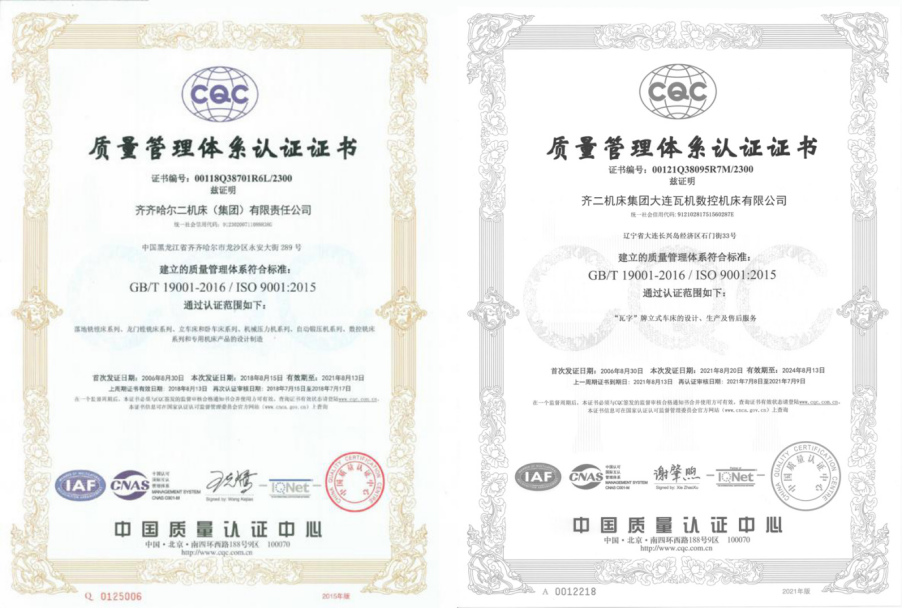
Before leaving the factory, each machine undergoes air-run testing and heavy-duty cutting specimen inspection. Key functional components are sourced from established suppliers such as Siemens and Fanuc, and long-term spare parts supply is guaranteed. On operating cost, the manufacturer states that, through its tool management system and cutting technology, tool life is approximately 25% longer than comparable products, and the energy-saving design reduces long-term power consumption compared with traditional models.
Conclusion
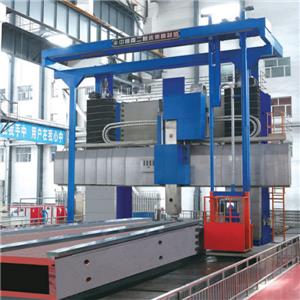
For manufacturers evaluating a large cnc floor-type milling boring machine, the more useful question is not whether the equipment is "smart," but which of these specific, verifiable capabilities — five-axis composite machining, thermal compensation, tool management, configuration flexibility, and factory-tested reliability — actually match their workpiece and production requirements. As one reference point, the manufacturer has developed a customized five-axis machining solution for a European aerospace parts manufacturer on this platform, shortening that customer's production cycle.
If you are evaluating a TK69 or TH69 series cnc floor-type milling boring machine, feel free to contact Dalian Waji to discuss the configuration suited to your workpieces.