-
06-11 2026
Hydropower Turbine Machining: Large-Diameter CNC Vertical Lathes for Oversized Workpieces
The Renewable Energy & Power Infrastructure sector is experiencing a massive scale-up. As nations push for greener grids, the physical size of hydroelectric power generation equipment—such as large-scale hydro-turbine runners, generator rotor hubs, and stator frames—is growing exponentially. Machining these colossal, multi-ton components requires specialized heavy-duty equipment.
-
06-10 2026
Machining Rock Crusher Bases: Why High-Rigidity CNC Vertical Lathes are the Key to Lowering Costs
When it comes to manufacturing mining machinery, few tasks are as demanding as rock crusher machining. The components involved—such as crusher bases, heavy excavator slew bearings, and oversized gear blanks—are characterized by their massive size, uneven material distribution, and extreme hardness. For machine shops handling these parts, the primary challenge is dealing with tough, heavy-duty interrupted cutting. If your machine tool lacks the necessary structural rigidity, you will face severe tool wear, poor surface finish, and potential machine breakdown.
-
06-08 2026
CNC Vertical Lathe Specification Guide: Choosing from φ800 to φ2000mm Cutting Diameters
Purchasing an industrial-grade cnc vertical lathe machine is a major capital investment. Making the wrong choice can lead to significant production bottlenecks, insufficient machining capacity, or wasted floor space and budget.
-
06-02 2026
The Secret to 600-Ton Load Capacity: Constant-Pressure Hydrostatic Guideways in Heavy CNC Turning
When engineers in Shipbuilding, Marine Engineering, and Renewable Energy design massive steering gear housings or giant wind turbine main bearings, the weight of the raw workpiece often exceeds tens, if not hundreds, of tons. Supporting this immense mass on a spinning lathe table introduces a profound mechanical challenge: friction. Traditional mechanical bearings or box ways would rapidly degrade, overheat, and seize under such catastrophic pressure.
-
05-28 2026
Machining Large Marine Propeller Flanges: Why You Need a Heavy-Duty VTL (1)
The Rising Demands of the Global Shipbuilding Industry The global shipbuilding and marine engineering sector is undergoing a massive transformation in 2026. As cargo ships, oil tankers, and naval vessels become larger to achieve economies of scale, their propulsion systems and engine components must scale up accordingly.
-
05-26 2026
How to Improve Machining Precision for Wind Turbine Main Bearings? A Complete Guide (2)
How Advanced CNC Vertical Lathes (VTLs) Solve Precision Challenges To machine wind turbine components efficiently, manufacturers are shifting towards specialized Heavy-Duty CNC Vertical Lathes. Let's break down the cutting-edge technologies that make this possible, using the DALIAN WAJI CNC MACHINE industrial series as the benchmark.
-
04-14 2026
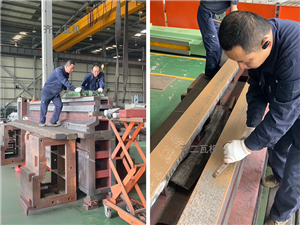
Manual Scraping vs. Mechanical Grinding: Why High-End Vertical Lathes Cannot Do Without This Traditional Craft?
In the era of the Industrial Internet—a time defined by the relentless pursuit of production efficiency—DALIAN WAJI CNC MACHINE CO., LTD. continues to preserve a technique that appears primitive yet is, in reality, remarkably precise: manual scraping. This process embodies the enduring legacy of the "craftsman spirit" and serves as the cornerstone for ensuring the long-term precision, vibration resistance, and smooth sliding motion of heavy-duty machine tools.
-
10-08 2023
Sales Cases Of Vertical Machine Tools
-
09-01 2023
Our High-quality Service System
-
08-25 2023
Explore The Variety Of Machine Tools