
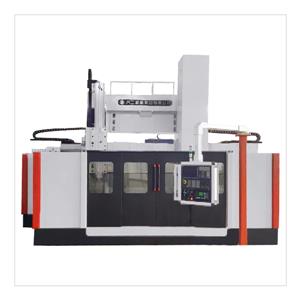
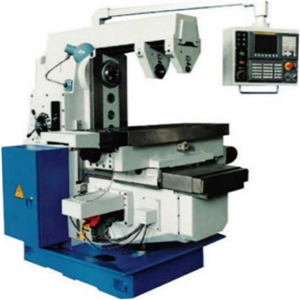
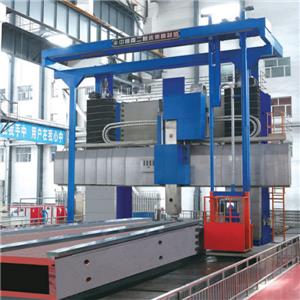
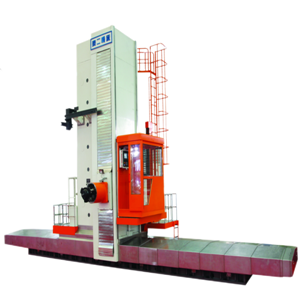
How Machine Tool Configuration Affects the Total Machining Process
When purchasing CNC Floor Type Milling And Boring Machine, manufacturers often begin by comparing machining diameter, travel, spindle power, torque, table load capacity, and accuracy. These specifications matter, but once a machine enters production, the result depends on more than any single parameter.Repeated setups, difficult access, workpiece transfers, and whether tooling and workholding fit the production flow can all affect machining.
Therefore, the key question is whether the machine tool configuration fits the actual machining process, not simply whether individual specifications are higher. For buyers, this is also an important basis for a sound CNC machine selection.
1. Machine Selection Should Start With the Machining Process
If purchasing starts with specifications alone, buyers may focus too heavily on individual figures. A better approach is to first clarify the actual machining tasks and then determine the required configuration.
This means considering the workpiece size, weight, structure, and main operations, as well as the complete process: which operations are performed on the same machine, whether machining directions change, how the workpiece is clamped and positioned, and whether frequent adjustments or transfers are required.
A single-operation task may need only a focused configuration. When several operations must be completed continuously, machining range, tooling, workholding, and process connection become more important. Conversely, an overly complex configuration may add little value to a simple, fixed production process.
Therefore, machine configuration should be the result of analyzing the machining process, rather than a combination of specifications selected separately from production requirements.
2. Workpiece Requirements Determine the Basic Machine Configuration
Once the process is clear, workpiece requirements need to be matched with the machine's basic capabilities.
l For large components, it is not enough for a CNC Floor Type Milling And Boring Machine to accommodate the workpiece. Buyers should also check whether the machining area and machine travel cover the required areas and whether there is enough space for tool approach and access.
l Workpiece weight also affects configuration. Load capacity should be considered together with clamping, positioning, loading, and unloading. If the clamping and positioning solution does not match the machine's working area, additional preparation may be required even when cutting capability is sufficient.
Size and weight therefore affect not only whether a workpiece can be machined, but also how the machine will be used. During procurement, matching clear technical requirements against the proposed configuration is more meaningful than simply comparing specifications.
3. Machine Configuration Affects More Than Cutting Capability
Spindle power, torque, and speed are common comparison points because they indicate cutting capability. However, they do not independently determine the entire machining process.
The machine must also work with the tooling system, workholding method, machining travel, positioning method, and operating space. If these elements do not coordinate well, new limitations may appear.
For example, sufficient spindle capability for one cutting task does not mean all machining steps can be connected smoothly. Additional repositioning or restricted access can still interrupt the process.
This is why machine tool configuration should be viewed as a coordinated system, not a set of isolated specifications. For buyers, the important question is whether the configuration as a whole supports the actual machining tasks.
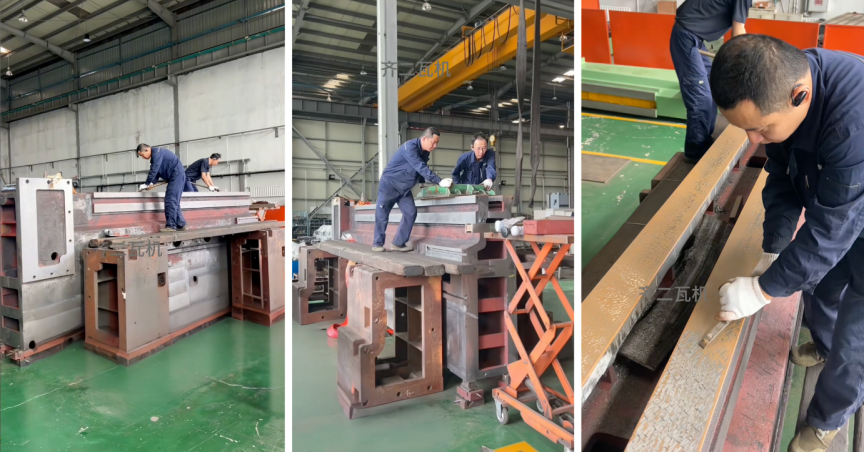
4. The Right Configuration Can Reduce Interruptions in the Machining Process
Cutting is not the only activity that consumes production time. Repeated setups, repositioning, workpiece transfers, adjustments, and interruptions between operations can break an otherwise continuous process.
Sometimes these problems are rooted in CNC Floor Type Milling And Boring Machine configuration selection. If machining range, tooling, workholding, or machining direction does not match the workpiece, extra steps may become necessary. Limited accessibility may require a different setup, adding preparation and calibration work; poorly connected operations may require moving the workpiece to another machine.
A suitable configuration does not mean every process must be completed in a single setup. Workpiece characteristics, machining methods, and equipment cost still matter. The goal is to avoid interruptions that could have been reduced through better configuration. Therefore, machine configuration can directly affect production continuity.
5. Machine Configuration Should Also Match the Production Method
Buyers also need to consider how the machine will be used in the future. The same configuration can have different value under different production models.
For single-piece or small-batch production, flexibility may be more important because workpieces can vary in size and structure. For repetitive production, process stability and a consistent production rhythm may matter more.
If many types of large components are involved, a configuration designed too specifically for one workpiece may limit future use. If production is stable and product variation is limited, a configuration closely matched to actual requirements may better support a consistent process.
Therefore, appropriate CNC machine selection is not simply about finding the machine with the most functions. Buyers should consider both today's workpiece and future production plans. From this perspective, machine configuration is also part of the production strategy.
6. A Better Machine Configuration Ultimately Serves the Entire Machining Process
From a procurement perspective, machine configuration should connect the workpiece, machining operations, equipment, tooling, workholding, and production method in a practical way.
The decision can be viewed as: Workpiece requirements → Machining process → Machine configuration → Tooling and workholding → Machining operations → Production method.
A mismatch at any stage may later appear as extra adjustments, interruptions, or a more complicated production flow.
Buyers should therefore not simply pursue the highest individual specification or assume that a more complex configuration is automatically more advanced. A valuable configuration is one that addresses the actual workpiece and machining requirements while matching the manufacturer's production method.
For large and complex components, this overall approach is especially important. Different machining tasks may require different machine types and configuration combinations, but the final decision should always return to the actual production process.
If you would like to look more closely at a specific dimension of this decision — such as the relationship between machine travel and machining space, how workpiece geometry changes machine requirements, or how to choose between vertical and horizontal turning — our related articles examine these questions in more depth from their own specific angles.
Conclusion
There is no single “best” answer when it comes to machine configuration. What matters is whether it can address current machining requirements and provide appropriate support for future production.
If you are evaluating the CNC Floor Type Milling And Boring Machine configuration required for a specific workpiece or production process, feel free to contact us to discuss a suitable solution based on your actual machining requirements.