
How Workpiece Geometry Changes CNC Machine Tool Requirements
In CNC machine selection, workpiece dimensions are usually among the first factors buyers consider. For actual machining, however, simply knowing how large a workpiece is may not be enough to determine whether a machine is truly suitable.
Two workpieces with similar overall dimensions can have completely different geometries. One may be a large-diameter, relatively short disk-shaped workpiece, while another may be a long shaft whose axial dimension is significantly greater than its diameter. A workpiece may also have a regular square or rectangular structure, while another may have a more complex, irregular shape.
Although these workpieces may have similar overall dimensions, their machining features, machining areas, and workpiece support requirements can be different, which in turn changes the actual requirements for a CNC machine.
Thus, when choosing a machine, buyers should not be only guided by the part size. They have to dig deeper and examine the shape/ design features of the part to decide if the setting up of the machine is consistent with the machining job.
1. Round and Disk-Shaped Workpieces: Start with the Relationship Between Diameter and Axial Dimensions
Round workpieces are common in CNC machining, but the term “round” alone does not determine which type of machine should be selected. For round or disk-shaped workpieces, the first factors to consider are the workpiece diameter, axial dimensions, and the main machining requirements.
For example, a heavy disk-shaped workpiece with a large diameter and relatively short axial dimensions is different from a cylindrical workpiece with a significantly greater length. Although both are rotational workpieces, the factors that need to be considered during machining may not be the same.
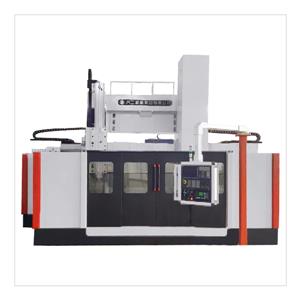
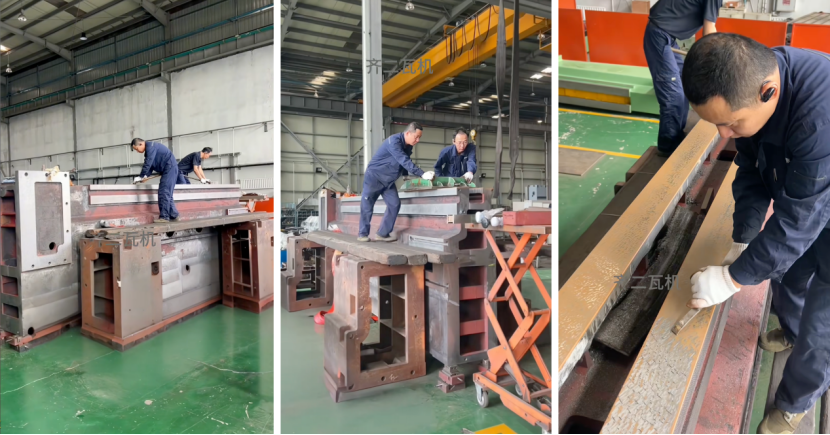
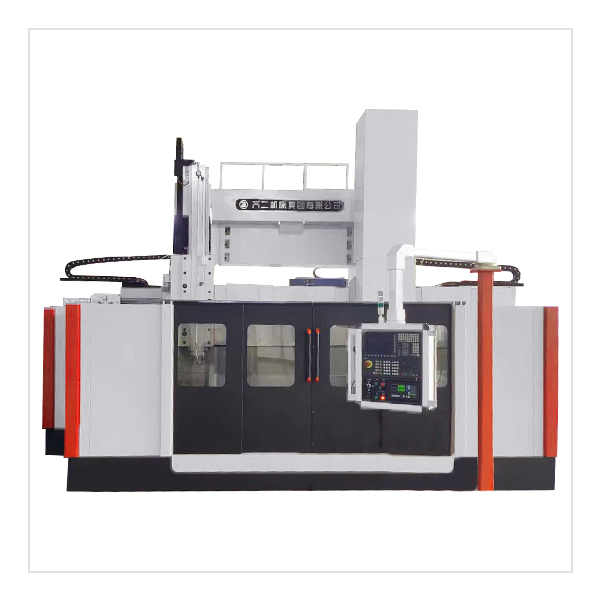
For large, heavy workpieces with relatively large radial dimensions, a CNC Vertical Turning Machine may better suit their machining characteristics. The workpiece can be positioned vertically on a rotating table, while gravity can also contribute to workpiece support and stability.
However, this does not mean that every round workpiece is suitable for a CNC Vertical Turning Machine. Buyers also need to confirm the workpiece diameter, length, main machining areas, and specific machining requirements. Only by considering these factors together can they determine whether the machine layout and capabilities actually match the workpiece.
Therefore, for round or disk-shaped workpieces, "How large is the diameter?" is just the first question to ask. The relation between diameter and axial dimensions combined with the machining requirements that the workpiece really needs are also very significant issues.
2. Long Shafts and Cylindrical Workpieces: Length Is Only One Factor
Compared with disk-shaped workpieces, long shafts and cylindrical workpieces have a geometry that is more strongly defined by their axial length.
When machining this type of workpiece, buyers need to consider its length, diameter, support requirements, and main machining areas.
For example, when the length of a workpiece is significantly greater than its diameter, how the workpiece will be supported during machining and how the cutting tool will access the required machining areas become important considerations in CNC machine selection.
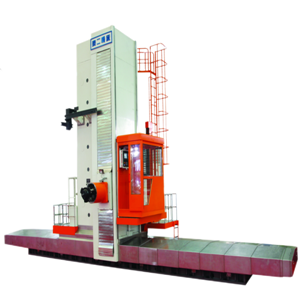
Horizontal turning uses a horizontal spindle and corresponding tooling configuration and can accommodate workpieces of different shapes and sizes for high-precision machining. For certain longer rotational workpieces, this machine layout may better suit the actual machining method.
However, this should not be interpreted simply as: A relatively long workpiece must be machined on a horizontal machine. The actual selection still needs to consider the workpiece's specific dimensional proportions, machining features, support requirements, and machining conditions.
In other words, the length of the workpiece is not the final answer. It is one important factor that helps buyers determine whether a particular machine layout matches the workpiece.
3. Square and Rectangular Workpieces: Do Not Judge Only by the Outer Profile
It is quite a change for a machine when a workpiece transforms from a round, rotational shape into a square, rectangular or an entirely non-rotational shape. Under such circumstances, it would be very hard to find out which kind of machineware was involved solely because of its outer form.
Therefore, for square and rectangular workpieces, buyers should pay more attention to:
· Where the main machining surfaces are located;
· Which specific features need to be machined;
· Whether the machining areas are concentrated;
· From which direction the cutting tool needs to access the machining areas;
· How the workpiece needs to be supported and positioned during machining.
Roughly speaking, it means that in case of a flat workpiece, the outer contour is just a part of the geometrical characteristics of the workpiece. The factors that actually determine the capabilities of the machine are the interplay between the general shape and the actual machined parts.
4. Irregular Workpieces: Geometric Complexity Matters More Than the Shape Name
This becomes even more apparent with irregular workpieces. “Irregular” by itself is not a sufficiently complete description for machining.
As an illustration, two workpieces can exhibit very similar complex geometries. One piece might have most parts to be machined already arranged in a compact area, i.e., limited to a few zones whereas another workpiece contains machining features from multiple directions and its main machining areas are scattered in different sections of the workpiece.
Even though both workpieces may be described as “irregular,” the machine conditions that need to be considered can be different.
Therefore, for complex or irregular workpieces, buyers need to provide further information about:
workpiece dimensions, main machining features, machining area locations, machining directions, and the support and positioning conditions of the workpiece.
This information allows equipment suppliers to understand the actual machining task more accurately and helps determine the corresponding CNC machine requirements.
Therefore, workpiece geometry does not directly determine which CNC machine should be purchased, but it helps determine: what machining capabilities and configuration the machine needs to have.
5. What Should Buyers Ask About Workpiece Geometry When Selecting a CNC Machine?
Potential buyers, when asking machine tool dealers for CNC machine quotes, may first focus on the workpiece instead of getting right down to machine model comparison.
· First, identify the basic geometry of the workpiece.
Is it round, disk-shaped, a long shaft, square, rectangular, or a complex irregular structure?
· Second, determine the dimensional proportions.
If you are machining a round workpiece, think about the relation of the diameter with the axial length. In the case of square, rectangular or irregular shapes, you should know the external dimensions along with the location of main machining areas.
· Third, describe the actual machining features.
Where are the machining operations to be performed on the workpiece? Where are the primary machining areas? Are these machining operations localized in one place or spread over several areas of the workpiece?
· Fourth, consider the machining direction and workpiece support and positioning conditions.
How does the workpiece need to be supported? From which direction does the cutting tool need to access the machining areas? Do these conditions match the machine's layout and configuration?
After these factors have been clarified, buyers can compare different CNC machine configurations with a clearer understanding of the actual machining requirements. This approach is more targeted than simply comparing one maximum machining dimension with another.
Conclusion
CNC machine selection should not be based on only one question: “How large a workpiece can this machine handle?”
It should also address another question: “Is this machine suitable for the geometry and machining method of the workpiece?”
Many different shapes such as round, cylindrical, long-shafted, square, rectangular, as well as irregular shaped workpieces cannot easily be matched with a particular fixed type of machine via one-to-one pairing. Really, the things to be focused on are the basic shape, dimension, processing characteristics, area to be machined, and operating conditions of support and positioning.
When these factors are considered during the equipment-selection stage, buyers can move from understanding “what the workpiece looks like” to determining “what the machine needs to provide,” making the equipment selection more closely aligned with actual production requirements.
If you are evaluating a CNC Vertical Turning Machine for a specific workpiece, share its geometry, machining features, and requirements with us. Dalian Waji can help you discuss the machine configuration that fits your actual machining needs.