Machining Challenges in Large Energy Equipment Components
As the wind power, hydropower, and other energy equipment sectors continue to develop, industry demand is increasingly being transmitted to more complex and specialized manufacturing processes. For critical components such as wind turbine main bearing housings, generator rotor hubs, and hydro-turbine runners, machining is only one part of the overall manufacturing process.
Consider the case of wind turbine main bearings. These parts necessitate machining of the inner and outer raceways that requires high precision for dimensions and smooth surface quality. In intermittent machining of large forged steel workpieces, variations in cutting forces may result in vibrations and tool wear. Long machining operations generate heat which in turn may affect the dimension stability.
As a result, the challenges facing large-component machining are gradually extending beyond individual machining operations to broader issues involving delivery, production organization, quality control, and specialized manufacturing capabilities.
1. Long Delivery Cycles Are Becoming a Practical Pressure in Energy Equipment Manufacturing
The production cycle of an energy equipment component involves much more than the actual cutting time on a machine tool.
From the arrival of a blank into the manufacturing process to rough machining, machining of different areas, finishing, and inspection, a large component may go through a relatively long production process. At the same time, material preparation, production scheduling, and waiting between different manufacturing stages can all affect the final delivery time.
Consider the case of wind turbine main bearings. These parts necessitate machining of the inner and outer raceways that requires high precision for dimensions and smooth surface quality. In intermittent machining of large forged steel workpieces, variations in cutting forces may result in vibrations and tool wear. Long machining operations generate heat which in turn may affect the dimension stability.
Consider the case of wind turbine main bearings. These parts necessitate machining of the inner and outer raceways that requires high precision for dimensions and smooth surface quality. In intermittent machining of large forged steel workpieces, variations in cutting forces may result in vibrations and tool wear. Long machining operations generate heat which in turn may affect the dimension stability.
Consider the case of wind turbine main bearings. These parts necessitate machining of the inner and outer raceways that requires high precision for dimensions and smooth surface quality. In intermittent machining of large forged steel workpieces, variations in cutting forces may result in vibrations and tool wear. Long machining operations generate heat which in turn may affect the dimension stability.
2. Project-Based Orders Create Greater Changes in Production Planning
Energy equipment manufacturing differs significantly from highly standardized mass production.
Consider the case of wind turbine main bearings. These parts necessitate machining of the inner and outer raceways that requires high precision for dimensions and smooth surface quality. In intermittent machining of large forged steel workpieces, variations in cutting forces may result in vibrations and tool wear. Long machining operations generate heat which in turn may affect the dimension stability.
Changes in orders can directly affect production planning.
When the dimensions, structure, or machining requirements of a component change, manufacturers may need to reorganize production resources, machining sequences, and machine availability. If requirements vary considerably between projects, a production arrangement that works for one batch may need to be adjusted for another.
Research on the wind power supply chain has also highlighted the challenges that changes in demand, order arrangements, and production planning can create for manufacturers.
For CNC machining companies, this means that the production environment is becoming more flexible.
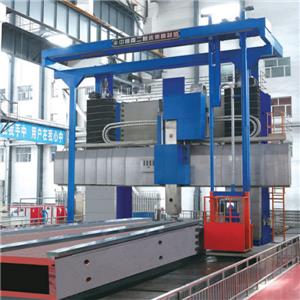
This flexibility does not mean that one machine must perform every possible task. Instead, manufacturers need production capabilities that can adapt to different components and project requirements. In large-component machining, the machining range, machine structure, and configuration options can all influence how effectively a manufacturer responds to changing orders. For different large workpieces, equipment options such as a Heavy Duty Milling And Boring Machine need to be evaluated according to machining range and process requirements.
The development of the energy equipment sector is therefore not only creating more manufacturing demand. It is also increasing the importance of production planning that can adapt to changing requirements.
3. Quality Control Is Becoming an Increasingly Important Part of Large-Component Manufacturing
For large energy equipment components, completing machining does not necessarily mean that the manufacturing process is finished.
Many components need to pass through multiple machining stages along with corresponding inspection and quality verification. Dimensions, hole systems, machined surfaces, and the relationship between different machined areas can all be relevant to subsequent assembly.
Quality control therefore cannot be limited to the final inspection stage.
If a deviation occurs during an earlier machining stage, the later it is discovered, the more work may be required to address it. For large components with long production cycles, additional machining or rework can also occupy machine capacity and extend production time.
This is one of the important differences between large energy equipment components and ordinary standardized parts.
Large critical components often involve significant manufacturing costs and long production cycles. As a result, manufacturers have greater reason to pay attention to machining consistency and quality control throughout different stages of production.
From a manufacturing management perspective, quality control is gradually extending from checking the finished product to controlling the manufacturing process itself.
Consider the case of wind turbine main bearings. These parts necessitate machining of the inner and outer raceways that requires high precision for dimensions and smooth surface quality. In intermittent machining of large forged steel workpieces, variations in cutting forces may result in vibrations and tool wear. Long machining operations generate heat which in turn may affect the dimension stability.
As energy equipment manufacturing develops toward higher requirements, this focus on process quality will continue to influence how CNC machining companies organize their production.
4. The Development of Energy Equipment Is Raising Demand for Specialized Manufacturing Capabilities
The changes discussed above ultimately lead to a more fundamental question: Does a manufacturer have the capability to consistently produce large critical components?
This capability is not simply a matter of having more machine tools. It also involves process experience, equipment adaptability, production organization, and quality control. For manufacturers handling large and complex components, evaluating equipment such as a Heavy Duty Milling And Boring Machine according to actual machining requirements can be part of developing suitable manufacturing capabilities.
Wind turbine main bearing housings, generator rotor hubs, and hydro-turbine runners, for example, do not all have the same structures or machining requirements. Some components primarily involve rotary machining, while other complex workpieces may require milling, boring, drilling, tapping, or other machining operations.
Manufacturers therefore need more than a fixed machining approach. They need specialized manufacturing capabilities that can respond to different components and project requirements.
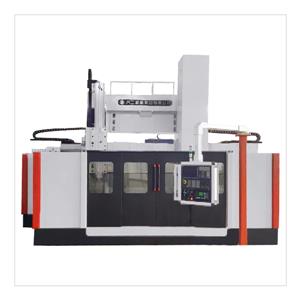
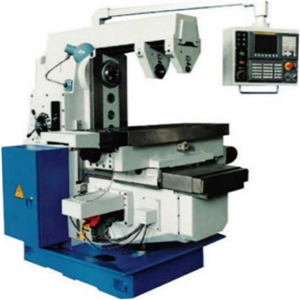
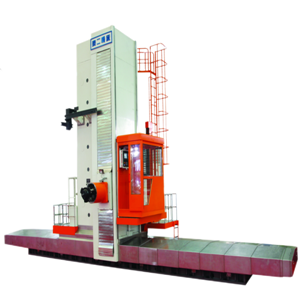
This is also why the configuration of large CNC machine tools increasingly needs to be considered in relation to the actual machining task. For large complex workpieces requiring multiple machining operations, a floor-type milling and boring machine can provide capabilities such as milling, boring, drilling, and tapping, while spindle specifications, axis travels, and machining head configurations can be selected according to the specific requirements. For some large and complex workpieces, a Heavy Duty Milling And Boring Machine may be evaluated based on machining operations and production requirements.
The TK69 Series CNC Floor Type Milling And Boring Machine is one example of this type of equipment for large and complex workpieces. Its design covers multiple machining requirements and allows corresponding configurations to be applied according to different machining tasks. For manufacturers handling large components with varying specifications, the value of this type of equipment is not limited to one individual machining operation. It reflects the broader development of large-component manufacturing toward more specialized and adaptable capabilities.
From a longer-term perspective, the development of the energy equipment sector also means that large-component manufacturing capabilities are becoming an increasingly important part of the supply chain. As wind power, hydropower, and other energy sectors continue to develop, manufacturers capable of consistently producing large critical components will play an important role in supporting the wider equipment manufacturing ecosystem.
Conclusion
The changes taking place in large energy equipment manufacturing are not simply about changes in component size.
More importantly, longer manufacturing cycles, project-based orders, changing production plans, and higher quality-control requirements are collectively reshaping the production environment for large-component manufacturers.
For CNC machining companies, the challenge is therefore not simply to have sufficient machining capacity. It is also about maintaining stable production in a changing order environment, controlling production cycles and manufacturing quality, and gradually developing the specialized capabilities required to handle complex large components.
As wind power, hydropower, and other energy equipment sectors continue to develop, large-component manufacturing will remain an important part of the energy equipment supply chain. For companies working on large energy equipment components, discussing the specific workpiece, machining requirements, and production needs with Dalian Waji can help identify a suitable machining approach. For companies considering large-component machining solutions, discussing whether a Heavy Duty Milling And Boring Machine is suitable for their manufacturing needs can also help identify an appropriate approach.